Low-CarbonIndustry News
Bluetooth NLC Lighting Buyer Guide for Retrofit Projects
Introduction
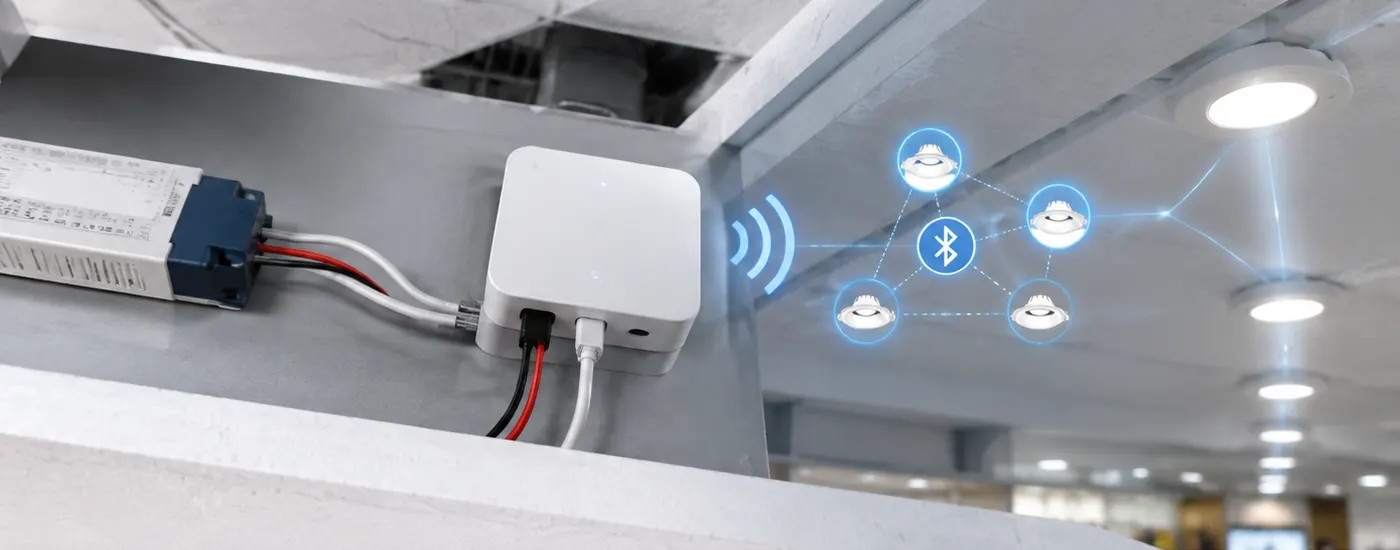
This bluetooth NLC lighting buyer's guide for retrofit projects answers the one question every wireless buyer really asks: if I fit these lights today, can another brand's sensor join them tomorrow. The one-line distinction first — Bluetooth mesh is the radio and communication base that moves messages between fittings, while Bluetooth NLC adds the device layer on top so luminaires, sensors and switches from different vendors understand each other. Mesh alone carries the packets; NLC standardises what the devices do with them. That distinction decides whether a refit stays open or quietly locks into a single supplier, and the checklist below turns it into purchase lines. The system picture behind this guide is our BLE mesh system for open multi-vendor networks.

The Five-Line Interoperability Checklist
Put these five lines on the quotation request before any price talk. A supplier who answers all five in writing is selling an open system; vague answers on any one of them price in a future rip-out. The crew procedure behind line four is written down in the bulk commissioning flow for BLE mesh lighting zones.
- NLC profiles named — which device profiles each luminaire, sensor and switch implements, in writing.
- Third-brand joining — how another vendor's sensor or wall key enters the network, and who commissions it.
- Gateway bridge — whether existing DALI drivers stay on their bus and appear as mesh members.
- Phone-first setup — zones grouped from the sales floor with an app, not per-driver software addressing.
- Offline scenes — which scenes survive an internet outage, tested before handover, not promised.

Plain Mesh vs NLC in One Table
Use this table to read any supplier's datasheet: the left column is what every Bluetooth mesh fitting already does, the right column is what the NLC layer adds. Pay for the right column only where your estate mixes brands or phases.
| Line | Plain Bluetooth mesh | With Bluetooth NLC |
|---|---|---|
| Standardised layer | Radio plus communication | Radio, communication plus device behaviour |
| Cross-brand mixing | Works if vendors chose matching options | Guaranteed where both sides implement the profile |
| Sensors and switches | Vendor-paired, often one app per brand | Any compliant sensor drives any compliant head |
| DALI drivers on site | Replaced or separately controlled | Kept behind a standardised gateway as mesh members |
| What stays the same | Local scenes, phone commissioning, no-cloud operation and mains-only wiring | |
One Network, Three Retail Zones
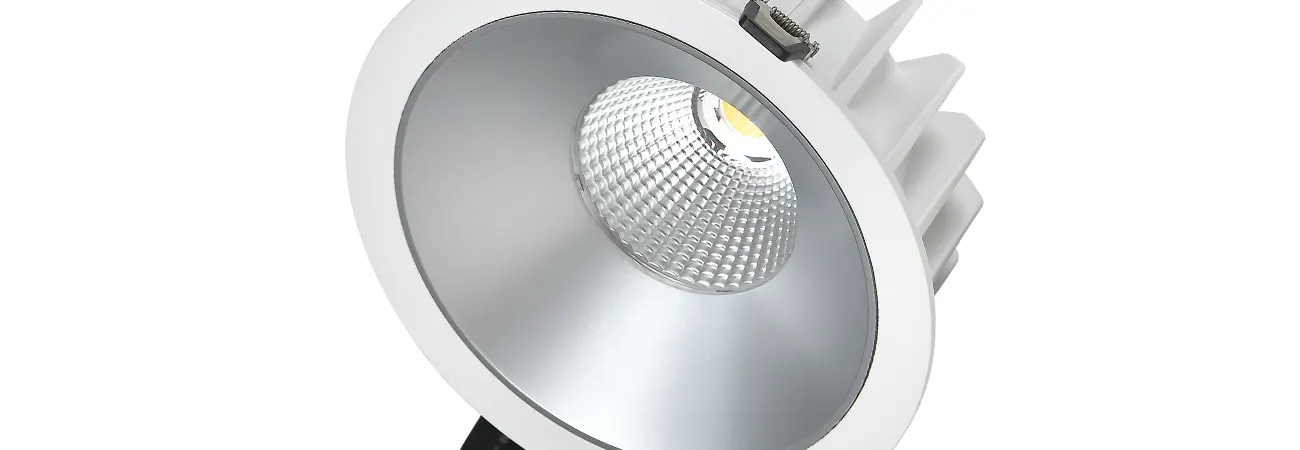
A refit buys fittings, not protocols — so here is the standard mapped onto a real floor. Track spots take the product highlights, downlights hold general comfort light, and linears wash the shelf aisles, all on one network split into software zones that regroup when the planogram changes. The DL01-BLE bluetooth mesh downlight for retail zones covers the ambient zone at 10-30W for 1450-4300lm, UGR22 Ra90 with 38/60-degree beams in standard 105-200 mm cutouts — the mains-only housing this guide's checklist assumes.

Keep the DALI Drivers You Already Own
The most expensive line in many refits is the hardware already in the ceiling. A standardised Bluetooth-to-DALI gateway keeps D4i drivers on their wired bus and presents them to the mesh as ordinary dimmable members — including real-time energy data the drivers already report — so the wireless refit reuses the driver stock instead of scrapping it. Which radio should carry that gateway traffic was settled in the Zigbee BLE WiFi protocol comparison for refits; this guide settles what the devices say once they join. The device-layer definitions themselves come from the Bluetooth SIG networked lighting control overview.
The Fitting That Proves This Guide
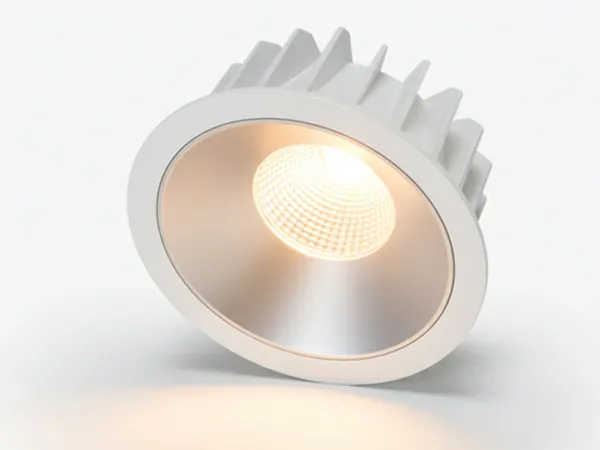
Checklists need a shelf item behind them. The DL01-BLE at 10-30W and 1450-4300lm wires mains-only with no signal pair, groups by phone or wall keys, and bridges existing DALI gear through a gateway — every behaviour the five lines above demand. Order it by ceiling cutout first and let the zones follow the merchandise, not the wiring plan.
FAQ
Conclusion
Buy the openness first and the lumens second: five checklist lines on the quotation, one network across three retail zones, and a gateway where drivers already live. The rest — scenes, schedules, regroups — is software on top of an open standard. For the wired audit-trail counterpart that turns the same zones into Class A records, see the DALI-2 D4i guide for Class A BACS compliance.
Mesh moves the messages; NLC decides what the devices do with them. For retrofits that means accent, ambient and aisle heads share one open network, while existing DALI drivers stay behind a standardised gateway instead of being scrapped.
Sources
- According to the Bluetooth SIG, Bluetooth Mesh Networking (2026), mesh uses a decentralised architecture with publish/subscribe messaging and phone-based commissioning.
- Bluetooth mesh covers radio and communication; Bluetooth NLC adds the device layer so multi-vendor heads, sensors and switches work as one system.
Send Message
Fill out the form and we will get back to you as soon as possible